





Upgrades
Game Mechanics
Table of Contents
Refined Sand
Putting sand into a refiner results in refined sand. There are 6 levels of refined sand, but there is no visual indicator that tells you which it is (except for the last level, which is called Fully Refined Sand).
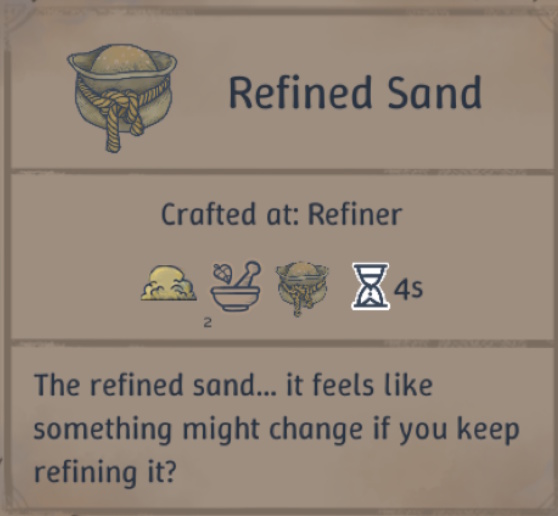
Each level of refinement requires half as many refiners as the previous level. Once you have fully refined sand, refine it 8 more times to get to diamond.
In total, it takes 2^14 = 16384 sand to make one diamond, costing 65536 
At level 7, you can buy Quartz Ore which refines into crude shard. Using this method, the crude shard costs 44000/80 = 550 copper each. Compare that to refining from sand, which costs 4*2^7 = 512.
Upgrade reset cost
You can reset your upgrade points as many times as you like, but the cost increases each time until the maximum at 10 gold.
| Reset count | Cost |
|---|---|
| 1 | 1  |
| 2 | 2 |
| 3 | 4 |
| 4 | 8 |
| 5 | 16 |
| 6 | 32 |
| 7 | 64 |
| 8 | 100 |
| 9 | 2  |
| 10 | 5 |
| 11+ | 10 |
Reputation

Your shop's reputation can be found at the top of your screen with the star icon. The higher it is, the more customers will come and make purchases at your shop.
- When a customer finds a product they are looking for, reputation increases.
- When a customer cannot find a product they are looking for, reputation decreases.
- Reputation has a minimum of 0 and a maximum of 100.
- Try to keep most of the items stocked in order to keep your reputation high.
Contracts
Contracts are unlocked by completing sample request quests. In order to get the sample request quest to show up in your mailbox, you must be a certain level as well as having dispatched a certain number of items in the previous tier:
| Item | Units per contract | Reward | Daily max | Units/min | Level needed | Dispatch requirement |
|---|---|---|---|---|---|---|
| 50 | 12 | 800 | 33.3 | 4 | - | |
| 50 | 18 | 1600 | 66.7 | 5 | 2000 Bandage | |
| 20 | 26 | 960 | 40.0 | 6 | 5000 Gloom Spores | |
| 20 | 60 | 1200 | 50.0 | 7 | 3000 Pocket Watch | |
| 10 | 340 | 480 | 20.0 | 8 | 4000 Fertile Catalyst | |
| 10 | 60 | 80 | 3.3 | 9 | 2000 Silver Amulet |
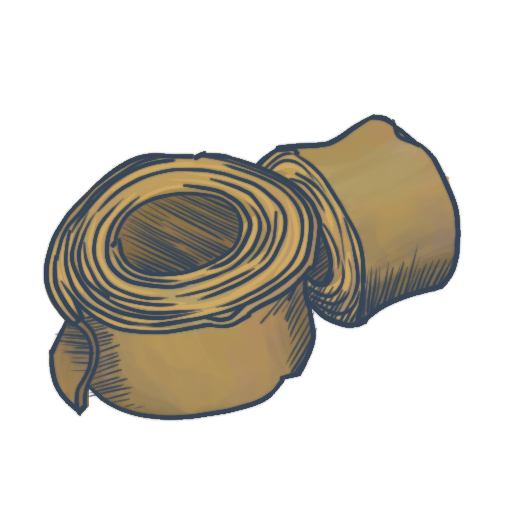
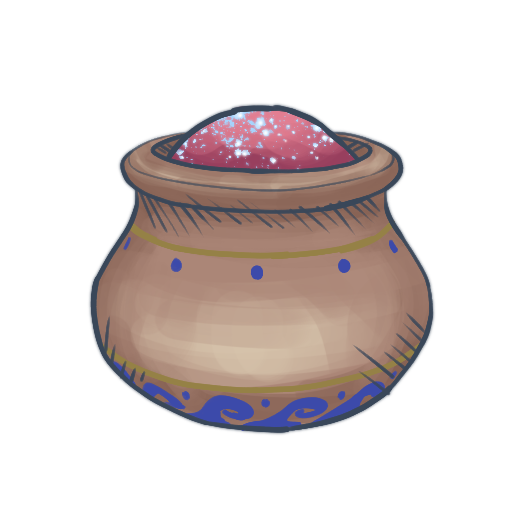
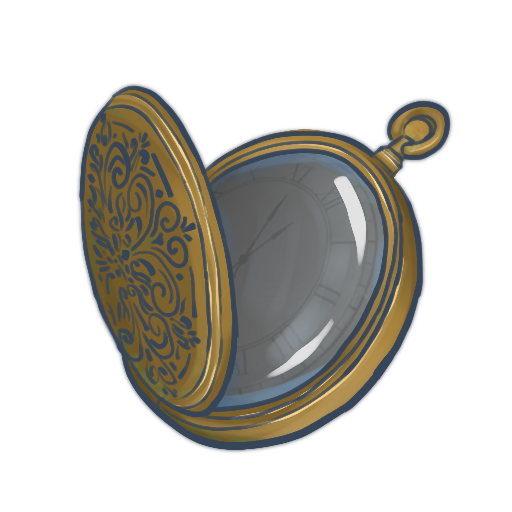

Note: See the Contracts Calculator.
Daily Quests
Each day at 6:00, your mailbox will have another quest for you to complete. There are 3 types:
- Random Quests: Expire in 3 days (72 real-world minutes) and give 130% market price.
- Bulk Quests: Expire in 5 days (120 real-world minutes) and give 160% market price.
- Urgent Quests: Expire in 1 day (24 real-world minutes) and give 200% market price.
Note: Quests are an excellent source of income because they boost your profit margins significantly.
Currency System
Alchemy Factory uses a three-tier currency system:
- Copper: Base currency unit (1 copper)
- Silver: 1 silver = 1,000 copper
- Gold: 1 gold = 100,000 copper (100 silver)
Experience (EXP) System
As you level up in Alchemy Factory, the EXP required to reach the next level increases. The graph below shows the cumulative EXP required to reach each level from 0 to 100.
EXP Growth Pattern:
- EXP requirements grow gradually at lower levels.
- Growth accelerates significantly at higher levels.
- Getting to Level 100 requires 1,202,034 total EXP.
Note: Thanks to faulty for the data and formula.